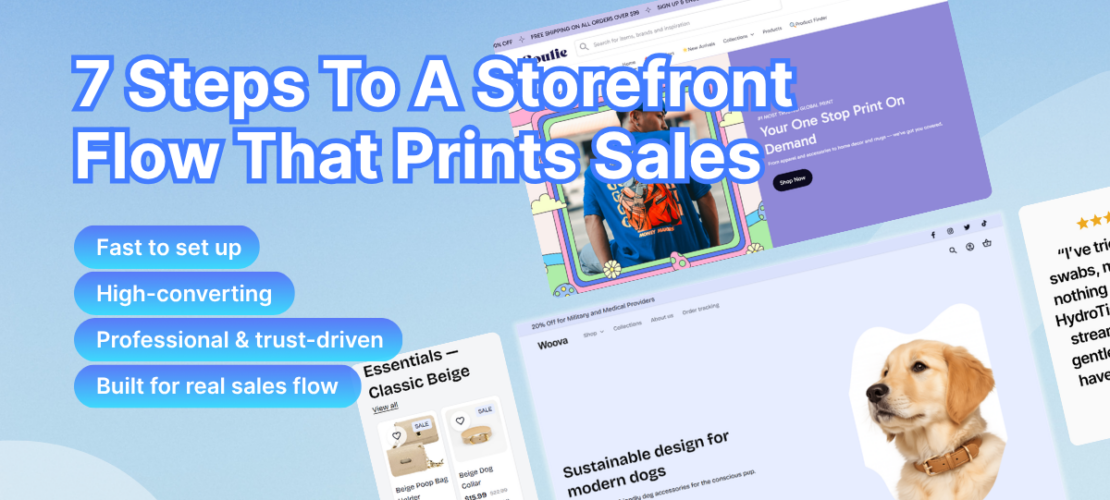

High-Converting Dropshipping Store Structure: Step-by-Step Guide
Table of Contents
High-Converting Dropshipping Store Structure: Step-by-Step Guide
You’ve seen them: the “hustle culture bros” spending three weeks picking the perfect hex code for their site while their bank account sits at a big fat zero.
Here’s a reality check: You aren’t building a digital art gallery; you’re building a sales machine. If your storefront is “aesthetic” but isn’t converting, you’re just doing high-effort, zero-value busywork. To survive in 2026, you don’t just need a website—you need a high-converting dropshipping store that transforms cold traffic into loyal customers.
A high-converting dropshipping store isn’t about art. It’s about guiding a customer from “just looking” to “shut up and take my money.” Research shows that a well-structured storefront can increase conversion rates by up to 300% compared to a poorly organized one — and most of that lift comes from layout, trust signals, and page speed, not from design flair.
Here is the No-BS Blueprint to turning your store template into a conversion monster.
1. The 2-Second Hook: Why Your Dropshipping Website Template Fails Before It Starts
In the world of ecommerce SEO and UX, you have exactly two seconds to prove you aren’t a waste of time. Studies from the Nielsen Norman Group consistently show that users form a first impression of a website within 50 milliseconds — and that impression determines whether they stay or bounce.
- The Strategy: Your headline needs to slap the visitor with a clear benefit. Use high-res hero images that show the product solving a real problem, not just sitting on a white background.
- The Pro Tip: If a customer has to guess what you sell, you’ve already failed. Use clear, benefit-driven language over ‘clever’ wordplay. Headlines like ‘Get Pain-Free Knees in 7 Days’ outperform ‘Welcome to Our Store’ by a factor of 5x in A/B tests.
Your dropshipping store template should make this framing effortless. If your current theme forces customers to scroll before they understand your offer, that’s a conversion killer baked into the design itself.
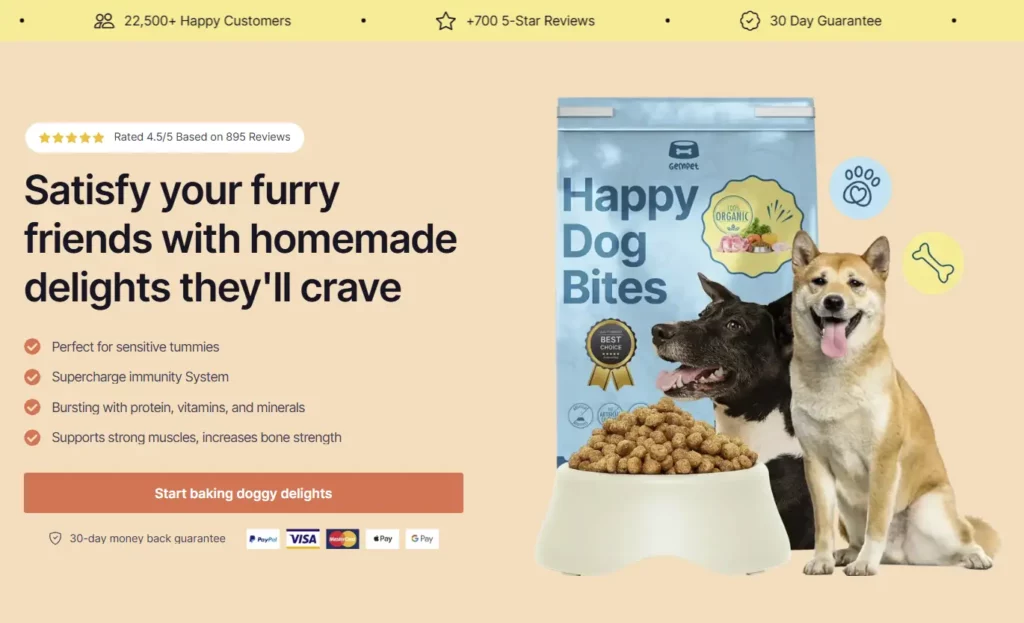
A great store headline captures customers’ attention within the first 2 seconds
2. Frictionless Product Pages: How a High-Converting Dropshipping Store Drives AOV
Stop making people hunt for the ‘Buy’ button. In a sales-optimized store template, your Call-to-Action (CTA) should be impossible to miss. Baymard Institute research found that the average large ecommerce site can increase its conversion rate by 35% through better checkout and product page UX alone.
- Maximize AOV: Bundle complementary products and surface upsell offers directly on the product page. If you aren’t maximizing your Average Order Value (AOV), you’re leaving money on the table. A customer already primed to buy is 60–70% more likely to accept an upsell than a cold visitor.
- Sticky CTAs: Sticky ‘Add to Cart’ buttons that follow the user as they scroll are a standard feature in high-performing ecommerce themes — and for good reason. They reduce the cognitive load of having to scroll back up to convert.
- Urgency Signals: Use urgency cues — low stock indicators, countdown timers for limited offers — directly within the product section. These aren’t tricks; they’re accurate information that helps buyers make faster decisions.
Highlight your buy button—don’t let customers wonder where to click
3. Social Proof That Actually Converts on Your Ecommerce Storefront
People can smell fake, bot-generated reviews from a mile away. ’10/10 quality’ with zero context doesn’t sell anymore. A 2024 BrightLocal survey found that 79% of consumers say they trust online reviews as much as personal recommendations — but only when those reviews feel authentic.
- The Solution: Embed real User-Generated Content (UGC): customer photos, short video clips, and detailed reviews with specific use cases. A review that says ‘I used this for my lower back pain after 8 hours at a desk, and it worked in 3 days’ converts far better than ‘Great product!’
- Review Volume: Display review counts prominently near the product title. Social proof math is simple: 847 reviews at 4.6 stars is more persuasive than 12 reviews at 5.0 stars. Volume signals legitimacy.
- Placement Matters: Trust isn’t built at the checkout page — it starts the moment a lead sees that a real human being bought the product and got value from it. Position your best UGC above the fold where possible.
Build trust by showcasing real customer testimonials
4. Authority Signals: Turning a Generic Dropshipping Theme Into a Trusted Brand
Expert endorsements, certifications, and trust badges aren’t just ‘fluff’ — they are credibility multipliers. They are what turn a generic dropshipped item into a ‘must-have’ brand. A Trustpilot consumer survey found that 61% of shoppers check for trust signals before completing a purchase on an unfamiliar website.

Add expert suggestions to strengthen trust and authority
- Trust Badges: Display recognizable trust badges near the checkout — secure payment icons, money-back guarantee seals, and shipping assurance badges. These small elements have been shown to reduce cart abandonment by up to 18%.
- Media Mentions: If your product has been featured in the media, show it. Even a mention in a niche blog counts. ‘As seen in…’ sections build authority fast.
- Certifications: For health, beauty, or wellness products, dermatologist approvals or certifications dramatically lift conversion rates among skeptical buyers.
5. FAQ Structure: The SEO Secret of a High-Converting Dropshipping Store
Kill the hesitation before it starts. Every unanswered question is a reason for a bounce — and a missed ranking opportunity. Google‘s featured snippets and People Also Ask boxes are overwhelmingly dominated by well-structured FAQ content.
- Expert Strategy: Address shipping times, return policies, product durability, and sizing upfront. These are the four most common pre-purchase questions in dropshipping, and leaving them unanswered is the fastest way to lose a sale.
- SEO Benefit: A well-structured FAQ section with schema markup helps you rank for the long-tail queries your customers are actually typing into Google — things like ‘how long does [product] take to ship’ or ‘what is the return policy for [product]’. These queries have high commercial intent and low competition.
- Format Tip: Keep FAQ answers concise (under 50 words each). Google favors tight, direct answers for featured snippet eligibility.
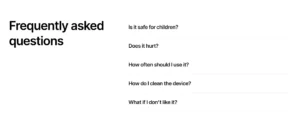
Provide customers with FAQs for a frictionless buying experience
6. The Retention Net: Email & SMS Capture for Your Dropshipping Store
Business 101: Not everyone buys on the first visit. In fact, studies consistently show that the average ecommerce store converts only 2–3% of first-time visitors. If you let the other 97% leave without capturing their contact info, you’re hemorrhaging potential revenue.
- The Incentive: Offer a discount (10–15% off the first order) or a lead magnet (free shipping, a buying guide) in exchange for an email address. Pop-ups triggered on exit intent — when the user is about to leave — have conversion rates of 3–5%, which compounds quickly.
- The Flow: Use automated re-engagement flows: an abandoned cart sequence, a post-purchase follow-up, and a win-back campaign for lapsed customers. Email and SMS marketing consistently delivers the highest ROI of any digital channel, at an average of $36 return for every $1 spent (Litmus, 2024).
- Theme Compatibility: Your store theme should support seamless email capture integration — either natively or via a lightweight popup tool that doesn’t tank your page speed.
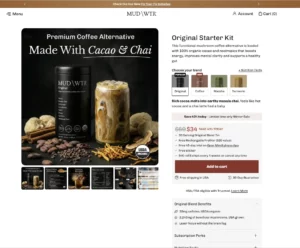
Boost conversions by adding upsell offers and clear product/shipping info
7. Site Speed: The Technical Engine Behind Every High-Converting Dropshipping Store
If your site takes more than 3 seconds to load, you’re effectively donating your customers to Amazon. Google’s own research confirms that as page load time increases from 1 to 3 seconds, the probability of a bounce increases by 32%. From 1 to 5 seconds, that number jumps to 90%.
- Core Web Vitals: A speed-optimized ecommerce theme is the difference between a winning product and a failed side hustle. Clean code, compressed images (WebP format), and lazy loading are non-negotiable in 2026.
- The Numbers: Every 100ms improvement in load time increases conversion rates by up to 8% (Deloitte, 2020). At scale, that’s a significant revenue delta. Test your store theme with Google PageSpeed Insights before you commit to it.
- Mobile-First: Mobile-first design is no longer optional. Over 70% of ecommerce traffic now comes from mobile devices, and Google indexes mobile versions of pages first. Your store template must deliver a flawless mobile experience — fast, thumb-friendly, and fully responsive.
Stop Overbuilding. Start Converting: Choose a ShopBase Template That Works
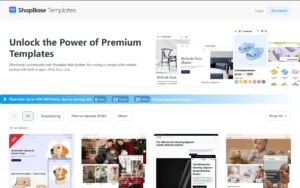
Curated ShopBase premium templates for dropshipping/POD sellers
Stop trying to be a web designer. The best-performing dropshipping sellers use templates that are literally engineered with this exact psychological flow in mind — the conversion triggers, the mobile optimization, the lightning-fast load speeds — so you can focus on what actually matters: making sales.
The seven elements above aren’t a wishlist. They’re a checklist. If your current store template is missing even three of them, you’re leaving a material percentage of your revenue on the floor every single day.
The good news? You don’t need to build any of this from scratch. The right ShopBase store template comes pre-loaded with the conversion architecture that takes most sellers months (and thousands of dollars in testing) to figure out on their own.
Ready to upgrade your store? Check out the hand-picked, high-performance ShopBase Templates that are currently crushing it in the market.
➡️ Join our community and follow us to stay updated with helpful tips and insights for growing your dropshipping/POD journey.